

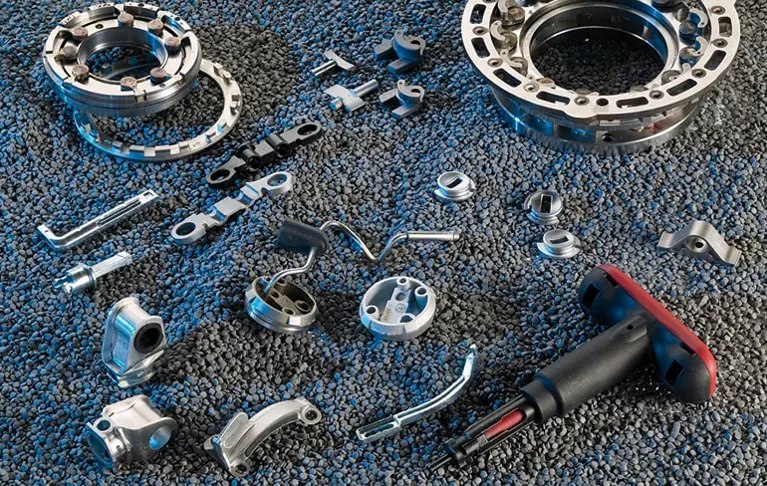
Metal injection molding represents one of those rare manufacturing processes that seems almost too good to be true, combining the speed and economy of plastic injection moulding with the strength and durability of metal components. Engineers who first encounter the technology often express scepticism that such small, complex parts can emerge from what appears to be a straightforward moulding operation, yet the process has proven itself across millions of production cycles in industries ranging from medical devices to consumer electronics. The technique has evolved from a laboratory curiosity in the 1970s into a robust manufacturing method capable of producing components that meet the stringent demands of aerospace, automotive, and surgical applications.
Understanding the Production Advantage
The economics of Metal injection molding become compelling when you consider what traditional machining would require. Imagine a small stainless steel component with internal threads, undercuts, and surface features on multiple planes. A machinist would need to set up the part several times, use multiple cutting tools, and spend considerable time achieving the required tolerances. The same component flows from a Metal injection molding machine in seconds, with all features formed simultaneously in a single operation.
Production rates can reach thousands of parts per day from a single machine. The moulds themselves, whilst expensive to create initially, can withstand hundreds of thousands of cycles before requiring maintenance. Singapore’s Metal injection molding facilities often run continuously, maximising the return on tooling investment and keeping piece prices competitive even for relatively small components.
Material Strength and Performance
The final properties of Metal injection molding components often surprise engineers accustomed to other powder metallurgy processes. Because sintering densifies the parts to ninety-six per cent or higher of theoretical density, the mechanical properties approach those of wrought materials. Tensile strengths exceeding 1,000 megapascals are achievable with certain stainless steel grades. Hardness values rival those of machined components from the same alloy family.
The microstructure reveals why these properties emerge. Under a microscope, properly sintered parts show minimal porosity and grain structures comparable to cast or wrought metals. The fine powder particle size, typically ten to twenty micrometres, creates a uniform microstructure free from the large voids that plague some conventional powder metallurgy parts.
Design Freedom and Complexity
Metal injection molding liberates designers from many constraints imposed by traditional metalworking. Consider these possibilities:
- Internal channels and passages that would require electrical discharge machining or complicated core pulling in conventional processes
- Thin walls below one millimetre in thickness, reducing component weight without sacrificing strength
- Complex surface textures moulded directly into the part, eliminating secondary operations
- Sharp corners and fine details that would challenge even skilled machinists
- Multiple holes, slots, and features formed simultaneously rather than sequentially
The tooling designer must account for the shrinkage that occurs during sintering, typically fifteen to twenty per cent linear. This predictable shrinkage allows for precise dimensional control once the process parameters are established. Parts routinely achieve tolerances of plus or minus 0.3 per cent of nominal dimension, with even tighter control possible for critical features.
Quality and Consistency
Manufacturing consistency matters enormously in production environments. Metal injection molding delivers remarkable repeatability once the process window is established. The same feedstock batch, processed through calibrated equipment with controlled debinding and sintering cycles, produces components with minimal variation from part to part.
Quality control typically involves several checkpoints:
- Green part inspection confirms moulding quality and detects any flow or fill issues
- Brown part examination after debinding verifies complete binder removal
- Sintered part measurement validates final dimensions and surface finish
- Mechanical testing on sample parts confirms material properties meet specifications
Singapore’s Metal injection molding industry maintains rigorous quality standards, particularly for medical and aerospace applications where component failure is unacceptable. Traceability systems track materials from powder lot through final inspection, creating documentation that satisfies regulatory requirements.
Cost Considerations and Break-Even Analysis
The investment in Metal injection molding tooling can range from several thousand to tens of thousands of pounds, depending on part complexity and the number of cavities in the mould. This upfront cost must be amortised across the production run. For high volumes, the piece price advantage becomes obvious. For lower volumes, the calculation requires careful analysis.
Generally, Metal injection molding becomes economically attractive at quantities above 10,000 parts annually, though this threshold varies with part complexity. Simple components might require higher volumes to justify tooling, whilst extremely complex parts that would be prohibitively expensive to machine can be cost-effective at lower volumes.
Applications Across Industries
The medical sector has embraced Metal injection molding enthusiastically. Surgical instruments, dental tools, and implantable components benefit from the process’s ability to create complex geometries with excellent surface finish. The electronics industry uses the technology for connector housings, switches, and electromagnetic shielding. Automotive manufacturers specify Metal injection molding for sensor components, fuel injection parts, and various brackets and fittings.
Consumer products increasingly incorporate components produced through this method. Watch cases, eyeglass frames, and smartphone components demonstrate the versatility and aesthetic possibilities. The ability to create thin-walled structures with precise dimensions makes Metal injection molding ideal for applications where weight and space constraints matter.
The Production Reality
Manufacturing facilities running Metal injection molding operations maintain careful control over numerous variables affecting part quality. Feedstock storage, moulding temperatures, injection pressures, debinding atmospheres, and sintering profiles all require monitoring and adjustment. Yet when properly managed, the process delivers components that combine the best attributes of casting, machining, and forming operations. Metal injection molding continues proving its worth as a production technology capable of meeting demanding specifications whilst maintaining the economics necessary for competitive manufacturing.
