
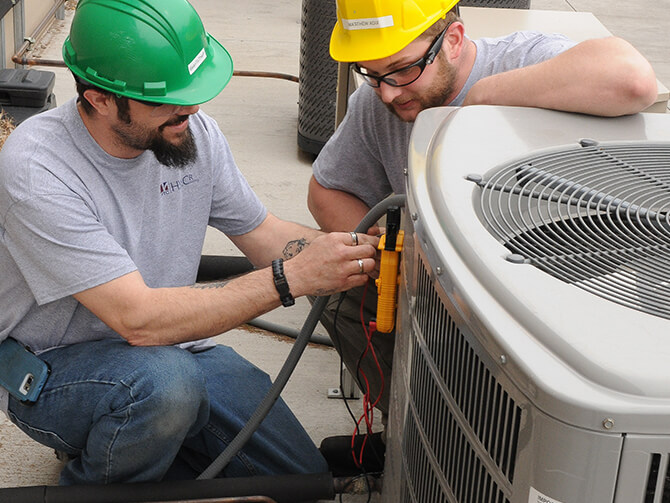

In the world of heating, ventilation, and air conditioning services, your website is often the first impression a potential customer has of your business. A generic or poorly built site can send the wrong message — confusing navigation, slow load times, or vague calls to action might drive visitors away before they ever contact you. On the other hand, a website built with care and purpose can convert curious browsers into real clients. That’s where the concept of HVAC web design really shows its worth: a thoughtfully designed site becomes more than a brochure — it becomes a powerful, always-on sales tool.
A proper HVAC web design should reflect your brand’s identity from the moment a user lands on the homepage. This means custom layouts with white space, readable fonts, a clean color palette, and images or photos that reflect your actual work — not generic stock photos. When design elements are aligned with your brand and services, visitors quickly understand what you offer and feel more confident your business is legitimate and professional.
Ease of use must also be a priority. Many people looking for HVAC services are doing so under stress — broken air conditioners, heating issues, urgent repairs. For them, a confusing or slow website is a major turn-off. A good HVAC site needs to load fast, look good on all devices (mobile, tablet, desktop), and make it easy for visitors to find contact information or service details immediately. Click-to-call buttons, prominent phone numbers, and contact forms on every page help convert visitors into leads — especially when they’re browsing on a phone.
While design and usability bring visitors in and help convert them, it’s only half the job. Without strong visibility on search engines, even the most beautiful site might remain unseen by customers. This is where HVAC SEO becomes indispensable. By optimizing your website content, metadata, and structure around relevant service keywords and location-based phrases, you dramatically improve your chances of being found by the people who need you.
Incorporating service‑area pages and location-specific content — for instance, highlighting the cities or neighborhoods you serve — helps boost your local reach. Embedding maps, listing consistent name/address/phone (NAP) information, and ensuring your site is discoverable by people in your area are all important parts of a high-performing HVAC website.
Moreover, content matters. Clear, informative pages describing each service (installation, repair, maintenance, emergency response) build trust, show professionalism, and cater to what customers are searching for. Well-written service descriptions, combined with good design and responsiveness, help the website deliver real value.
A good HVAC web design also considers scalability and long-term use. As your business grows — adding new services or expanding service areas — the website should be flexible enough to accommodate updates without requiring a complete overhaul. That makes it a long-term asset rather than a one-time cost.
Finally, when HVAC web design, HVAC SEO, and Local SEO work together — design that engages users plus optimization that ensures both visibility and local relevance — your website does more than just exist. It becomes an engine for lead generation. Visitors find you through search, trust your professionalism because the site feels credible, and then easily contact you for service — all without extra advertising.
In a competitive HVAC market, having a website that performs both visually and technically can make the difference between being just another name in search results and being the go-to service provider in your area. Investing time and care into HVAC web design — and combining it with smart HVAC SEO — sets you up for sustained growth, better online visibility, and a steady stream of new customers.


